
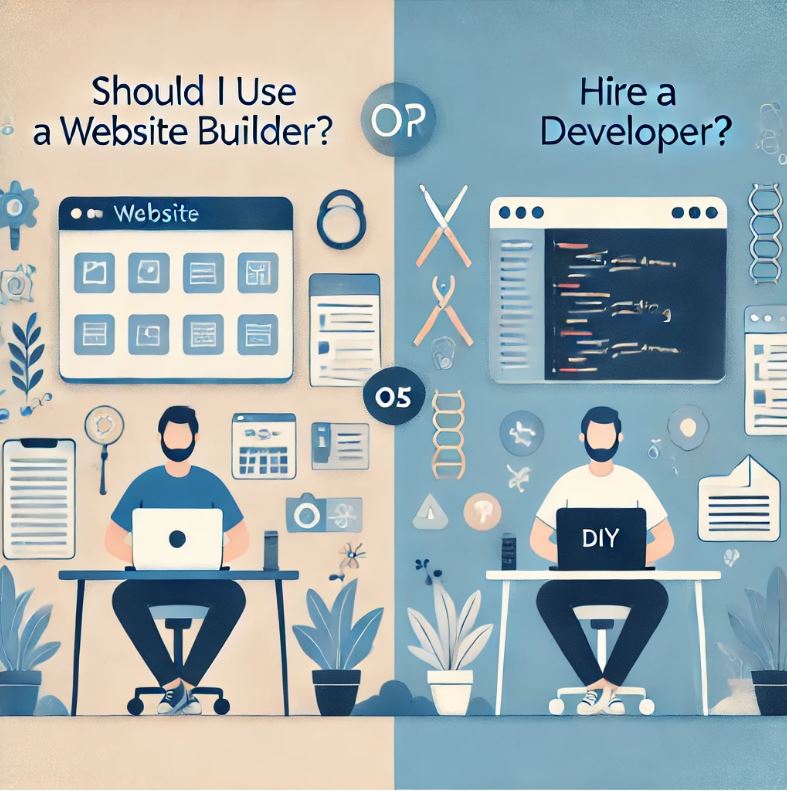
 Choosing between a website builder and hiring a developer often comes down to your specific needs and circumstances. Are you looking to create a personal blog, a small business site, or an e-commerce platform? The scope and scale of your project can influence the best approach.
Website builders like Wix, Squarespace, and Weebly are popular for good reasons. They’re designed to be user-friendly, letting you drag and drop elements to create a site. Perfect if you’re on a budget or need a site up and running quickly.
On the other hand, a developer can craft a bespoke website tailored exactly to your needs. If you require unique features or a complex design, professional developers have the skills to bring your vision to life. They’ll handle the coding, ensuring everything works smoothly, which is particularly crucial for larger, more complicated websites.
Finally, think about your long-term plans. Will your site need regular updates or new features over time? Website builders offer simplicity, but they might not scale well with your growing needs. A custom-built site by a developer can be more flexible, adapting as your business evolves.
Pros and Cons of Using a Website Builder
Pros
Cost Effectiveness
One major benefit is cost effectiveness. You can often start for free or at a low monthly fee, making it a budget-friendly option.
Quick set up time
They also offer quick setup times, which is great if you need to get online fast.
User friendliness
Their user-friendly interfaces mean you don’t need technical skills to design a functional and attractive website. Plus, a variety of templates are available, allowing you to choose and customize a design that fits your style and needs.
Cons
Customisation
Customisation options can be limited, which might leave your site looking generic or similar to others. If you need specific features or a unique design, these platforms might not have the flexibility you need.
Scalability
Scalability can be another issue; if your site grows, you might find that a website builder can’t support your needs effectively. These limitations can become a hurdle as your business or personal site develops over time.
Possibile Website Builder Options
- Wix stands out for its design flexibility and app-market.
- Squarespace is known for its sleek, professional templates.
- Weebly offers ease of use with a straightforward drag-and-drop editor.
Each builder has its strengths, so choosing one depends on your priorities and the specific requirements of your website.
There are other Website Builders and i will be looking at many of the options in further posts to come.
Pros and Cons of Hiring a Developer
Pros
Greater possibilities
Engaging a professional developer can elevate your website beyond the capabilities of standard builders.
Tailored Design Solutions
One of the biggest benefits is having a tailored solution specifically designed for your needs. Developers create unique designs and integrate customized functionalities that align perfectly with your brand identity.
Scalability
Scalability is another advantage. As your business grows, a developer can modify and expand your website seamlessly. Custom websites can handle increased traffic, add new features, and integrate with other systems smoothly. This flexibility ensures that your site evolves in tandem with your goals.
Professional Maintenance
Another key benefit is ongoing professional maintenance. Developers can offer support and troubleshooting, ensuring your website runs efficiently and securely. They can also implement updates and new features without disrupting your site’s performance, giving you peace of mind as your site evolves.
Cons
Costs
Costs can be significantly higher, factoring in both the initial development and any ongoing maintenance fees.
Which Website Developer to choose?
It’s also essential to find a reputable developer with the right skills; otherwise, you risk ending up with subpar work.
Lead time
Additionally, custom development usually takes longer compared to website builders, which might delay your launch timeline.
To make the best choice, consider developers who have a proven track record and understand your vision.
Look for reviews and examples of their previous work.
Communication is key – ensure they are responsive and willing to collaborate closely with you.
Making an Informed Decision: Which Option is Best for You?
Cost and functionality play crucial roles in deciding between a website builder and a developer. If the budget is tight and the website’s demands are straightforward, a website builder offers a practical and quick solution.
However, if your project demands unique features, high customization, and scalability, investing in a developer might be the better route. Although it comes with a higher price tag and longer development time, the result is a personalised and highly functional website tailored to your needs.
Also consider your long term goals. A website builder might be perfect for now, but as your business grows, will it be able to adapt? A developer can ensure that your site evolves alongside your business, providing the flexibility and robustness required for continuous growth.
Real world examples can be enlightening. A small café might thrive with a website builder, offering menu updates and reservation bookings quickly and affordably. On the flip side, an e-commerce platform with thousands of products would benefit from a developer’s expertise, ensuring efficient backend management and a seamless customer experience.
What experiences have you had with choosing between a Website Builder or a Developer? Let me know in the comments below.
I will be carrying out some comparisions of Builders in future posts. Look out for them.